
Short answer
SpotMax treats a strength plateau as a normal part of training. When an exercise stalls for two sessions in a row, the SpotMax completion screen marks it as steady and offers to ease off 10% so you can build back up. It's never forced. Within each session, auto-adjust tunes your remaining sets to how you're actually lifting.
Why do lifters get stuck on the same weight?
Usually because of accumulated fatigue, inconsistent training, short rests or jumps that are too big, rather than lost strength.
“I've been stuck on the same weights for months.” It's one of the five problems SpotMax was built around. The app's own explanation is blunt: a plateau usually means accumulated fatigue, not lost strength. Training hard for weeks piles up tiredness that hides what you can really lift. Take some of the load away, and the reps climb again.
Other common causes are less dramatic: rests that are too short for heavy sets, missed sessions, poor sleep, or adding weight before the reps were really there. A tracker can't fix sleep, but it can show you the pattern and stop you from guessing.
How does SpotMax spot a plateau?
It watches each exercise between sessions, and two sessions in a row with no progress in weight or reps count as a stall.
Progress means more weight or more reps. Adding a rep at the same weight resets the count, because that's the reps-first half of the Progression Plan working as intended. When an exercise has truly stalled twice, its row on the completion screen reads like STEADY AT 235 LB · 2 SESSIONS
, with an EASE OFF 10%
button beside it.
SpotMax deliberately doesn't show a stall as a warning. A plateau is a normal part of training, not something you did wrong.
What does the 10% ease-off do?
It lowers that exercise's planned weight by about 10%, rounded to a weight you can load, and the normal reps-then-weight climb starts again from there.
| Session | What you lifted | What SpotMax shows |
|---|---|---|
| 1 | 230 × 6, 6, 6 | Every set hit 6: 235 lb next, back to 4 reps |
| 2 | 235 × 5, 4, 4 | Same weight, reps first |
| 3 | 235 × 5, 4, 4 | No progress: stall 1 |
| 4 | 235 × 5, 4, 4 | STEADY AT 235 LB · 2 SESSIONS, with EASE OFF 10% |
| 5 | You tap ease off: 210 × 6, 6, 6 | EASED OFF 10% · BUILD BACK UP |
| 6+ | 215, 220, 225… | The normal climb, aiming past 235 |
235 lb minus 10% is 211.5 lb, rounded to a loadable 210 lb.
The ease-off is an offer, never forced. Ignore the button and the plan carries on at the same weight. It's per exercise too: a stalled bench doesn't touch your squat.
How is an ease-off different from a deload?
A deload is a planned lighter week across all your training; SpotMax's ease-off is one exercise stepping back after it stalls.
Deloads usually cut sets and effort across the board for a week, on a schedule or when fatigue is obvious everywhere. The ease-off is narrower and reactive. Both are tools for the same problem, fatigue hiding strength. If every lift is stalling at once, a full deload may make more sense. The deload guide covers when and how.
- You
“Yo Maxa, 235 for 3.”
- SpotMaxAdjusted
Logged, 235 for 3. Keep 235, aim for 4.
Two reps short is a real miss (a 1-rep miss is ignored). On strength goals SpotMax trims the rep target before the weight. Numbers are an example.
- You
“Yo Maxa, keep it at 235.”
- SpotMax
Okay, keeping 235 for 5.
Your call wins. The change is reversed.
What should you check before easing off?
Rest, consistency and effort, because a stall caused by any of those comes back after an ease-off.
- Rest long enough. Heavy sets of 6 or fewer reps usually need 3 to 5 minutes. Short rest is a common reason reps collapse. SpotMax's rest timer presets go up to 240 seconds.
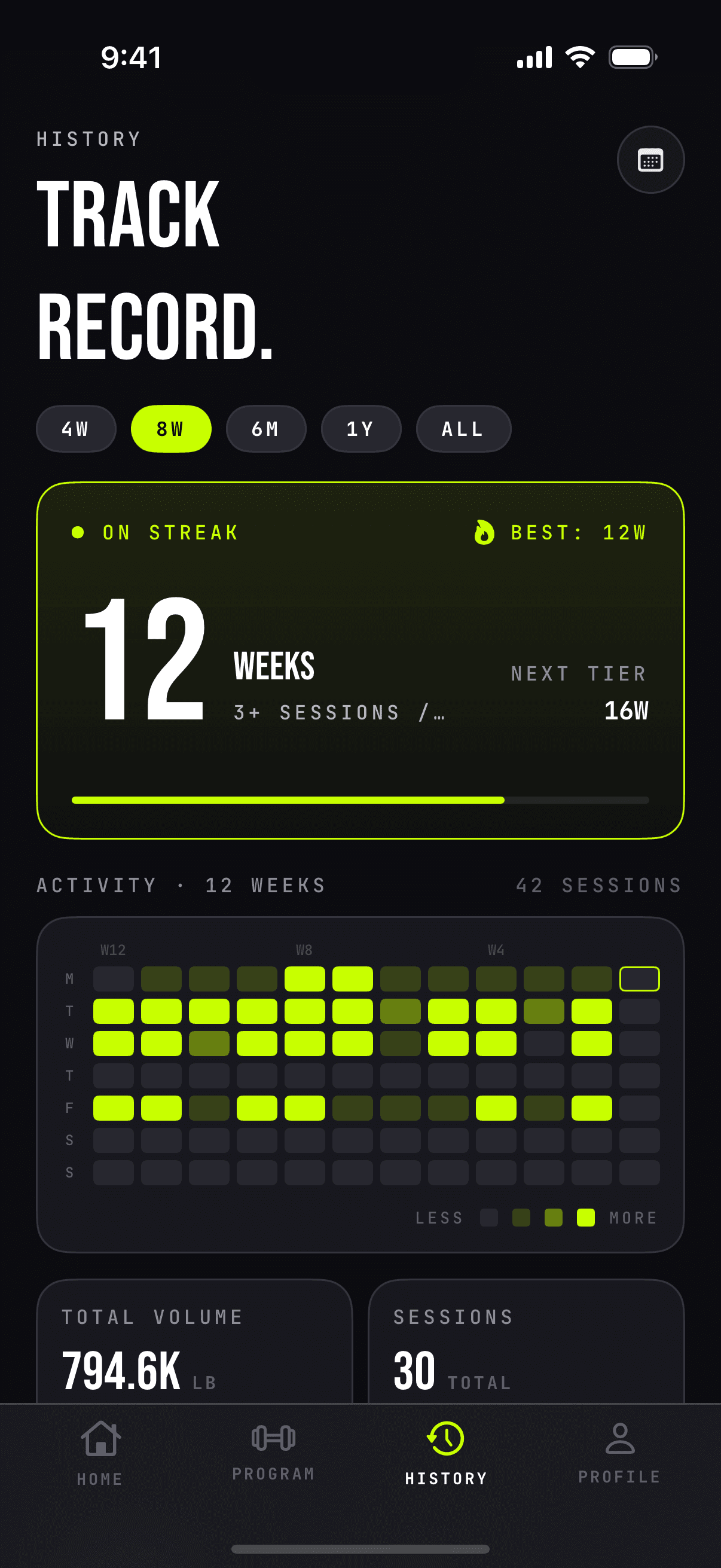
- Check consistency. The History tab's weekly streak and 12-week heatmap show missed weeks at a glance.
- Look at effort. If most of an exercise's working sets were grinds (RPE 10 or a failed rep), the plan already holds the weight. Say how sets felt so it can tell.
- Sleep and stress. No app can log these for you, but they show up in your numbers.
Plateaus: questions
Does SpotMax ease off automatically?
No. After two stalled sessions it offers the ease-off on the completion screen. You choose.
Do more reps at the same weight count as progress?
Yes. Adding reps resets the stall count, because building reps comes before adding weight.
More in Use cases.